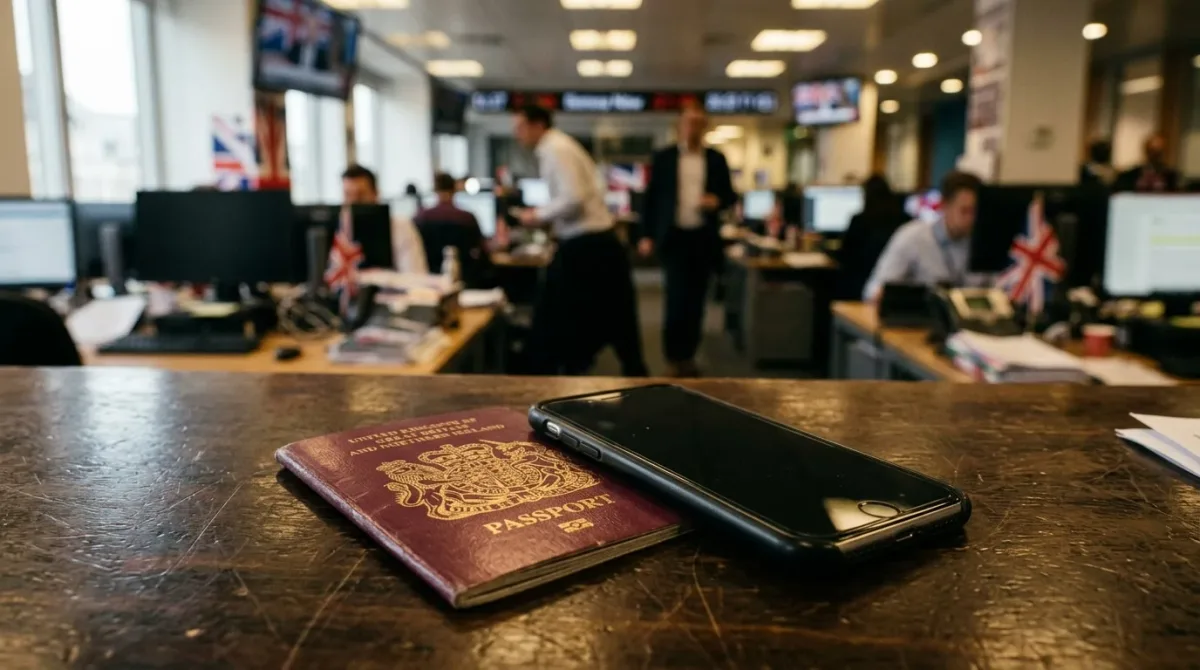
As of August 2026, US citizens still don't need a visa for UK stays under six months — but they do need a £20 Electronic Travel Authorisation (ETA) approved before departure, per the UK government's official guidance (SRC-01). Most decisions arrive within minutes through the UK ETA app, though the government's most recent guidance recommends applying at least three working days ahead (SRC-04). This is information, not legal or immigration advice.
The ETA isn't new, but plenty of travelers still confuse it with a visa, an entry stamp, or a formality they can skip because they've been to the UK before without one. It's none of those things, and getting it wrong means a denied boarding, not a border-control conversation.
What Is the UK ETA, and Who Actually Needs One?
An ETA is a digital pre-travel permission, not a visa — it authorizes you to travel to the UK but, as the Home Office puts it, "does not permit entry into the UK" on its own; a border officer still decides that at arrival (SRC-04). It covers England, Scotland, Wales, Northern Ireland, Jersey, Guernsey, and the Isle of Man. US citizens have needed one since the requirement expanded to non-European visa-exempt nationalities, including Americans, Canadians, and Australians, on 8 January 2025 (SRC-03). British and Irish citizens, and anyone who already holds UK immigration status, are exempt (SRC-04).
How Much Does It Cost, and How Long Does It Last?
The fee is £20 per application as of the government's April 2026 factsheet, up from the £10 introductory price charged at the January 2025 launch (SRC-03, SRC-04). Once approved, an ETA is good for multiple trips to the UK, each stay capped at up to six months, and the authorization itself lasts up to two years or until your passport expires, whichever comes first (SRC-04). You do not need a new one for every trip within that window — only if your passport changes or the ETA expires first.
How Do You Apply for a UK ETA?
- Go to the official government guidance page at gov.uk/eta/apply, or use the UK ETA app — not a third-party site, several of which charge markup fees the government's own guidance warns about (SRC-01).
- Enter your passport details and answer a short set of eligibility and background questions.
- Pay the £20 fee.
- Wait for a decision — most are automatic and arrive in minutes; a smaller share need manual review and can take longer (SRC-04).
- Save the confirmation. The ETA is linked electronically to your passport, so you don't need a printed copy, but keeping the confirmation email is a sensible backup.
One traveler can apply on behalf of family members or a group in a single session, which is useful if you're booking a family trip together (SRC-01).
How Long Does Approval Actually Take?
Budget three working days before you fly, even though most applicants get an answer in minutes through the app. The government's own guidance builds in that buffer specifically for the smaller number of applications that need further checks before a decision (SRC-04). Applying the night before a flight is possible in theory but leaves no room if your case is one that needs a closer look.
What Happens If Your ETA Is Refused?
A refusal means you should not travel to the UK on that authorization — the government's guidance is explicit that an ETA does not permit entry into the UK on its own, and a refusal is a separate, more serious outcome than a border officer questioning you on arrival (SRC-02). If your application is refused, that is a decision on your individual case, and this article can't advise you on next steps for it — contact UK Visas and Immigration directly through the official gov.uk channels.
Does the ETA Cover Connecting Flights Through the UK?
The official guidance ties the ETA to travel into the UK, Jersey, Guernsey, and the Isle of Man rather than to a specific purpose of visit, so check the current rules for your routing before assuming a same-airport connection is exempt (SRC-01). If your itinerary has you clearing UK border control at any point, even briefly, budget the same three working days for approval as you would for a full stay — a connection isn't a shortcut around the requirement.
How Is the ETA Different From an Old-Style Visa Application?
A visa application typically requires supporting documents, sometimes an interview, and a longer processing window measured in weeks. The ETA is closer to a screening form: passport details, a short questionnaire, and a fee, with most applicants approved automatically (SRC-04). The trade-off is that it's faster and cheaper than a visa, but it's also easier to overlook, since long-haul travelers used to visa-free entry to the UK may not realize the ETA now sits between them and boarding. This isn't something to sort out at the gate — apply before you leave home, not at check-in.
Fact Box
| Item | Detail |
|---|---|
| Who needs it | US citizens and other non-visa-national visitors without existing UK immigration status |
| Fee | £20 per application (as of April 2026) |
| Validity | Up to 2 years or until passport expires, multiple trips, stays up to 6 months each |
| Where to apply | gov.uk/eta/apply or the official UK ETA app |
| Processing time | Often minutes; government advises applying 3 working days ahead |
| Date checked | August 2026 |
Rules change — verify with the official source before booking. This is information, not legal or immigration advice.
For a related business news perspective, read Do You Need a Visa for a US Business Trip? The ESTA and B-1 Rules, Fees, and Timing.
For more context, read What Europe's new border system counted in its first quarter.
For more context, read gift.
For more context, read CrowdStrike system outage affecting flights at MIA.