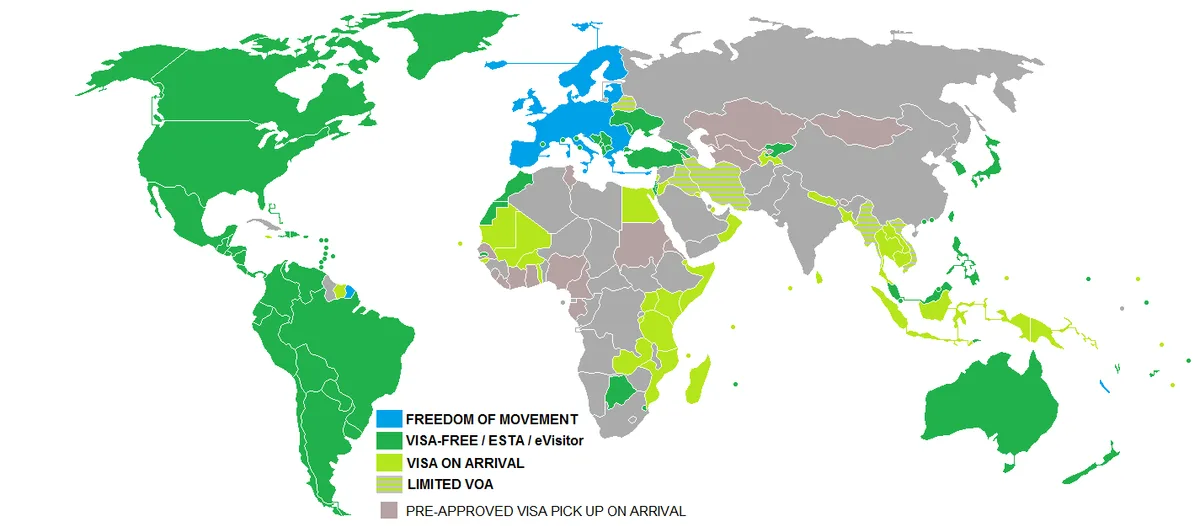
Do US Citizens Need a Visa for Japan? The Current Rules, Dated
No — as of August 2026, US citizens can visit Japan visa-free for up to 90 days for tourism, with arrival paperwork moving to the online Visit Japan Web system.

Entry requirements tracked against official sources: visa categories and fees, required documents, realistic processing times, transit and airside rules, electronic authorizations, stay limits and passport validity thresholds. Each guide carries the date it was verified. For travelers who need paperwork correct before booking anything nonrefundable.
Entry requirements by nationality: fees, documents, processing times, transit rules, authorizations and the passport validity that gets people refused.

No — as of August 2026, US citizens can visit Japan visa-free for up to 90 days for tourism, with arrival paperwork moving to the online Visit Japan Web system.

No visa doesn't mean no paperwork. Here's what ESTA covers, what it costs as of August 2026, and how far out to apply.

Validity says when you may enter; duration of stay says how long the entry lasts — and in the US, the admission record on your I-94 outranks both the visa and the passport.

An invitation letter answers the questions who, where, why, and who pays — and the financial commitment it states is only legally binding in some countries, which changes how much evidence the sponsor must add.

Most visa refusals at intake are clerical — a photo older than six months, a name typed differently than the passport, an answer that contradicts your last application — and all three are free to fix.

The entries line on a visa counts border crossings, not trips — and one afternoon in a neighboring country can quietly use up your second and last entry.

The State Department's monthly wait-time tool shows two separate clocks — interview appointment and administrative processing — and reading them correctly changes when you book, not just when you apply.

The Schengen short-stay application runs on a simple rulebook: apply at the consulate of your main destination, between six months and 15 days before travel, with a €90 fee since June 2024.

An e-visa is approved before you fly; a visa on arrival is granted at the border at an officer's discretion — the difference shows up in certainty, queues, and what happens when something goes wrong.

Transit visas depend on two things — your nationality and whether you leave the transit zone — and a handful of countries, including the US and the UK, require paperwork even for airside connections.