Southeast Asia's most common connection failure is not a delay — it is booking the wrong airport of the same city. Bangkok's Suvarnabhumi (BKK) and Don Mueang (DMK) sit 45 kilometers apart with a free shuttle for same-ticket transfers and a one-to-two-hour road trip for everyone else; Tokyo's Narita (NRT) and Haneda (HND) are over an hour apart by rail through the city. The fix is mechanical: read the airport code, not the city name, on every leg, and never plan a same-ticket connection across two different airports with less than three hours of buffer.
Rail links, terminal layouts, and shuttle rules below were checked against airport and operator pages as of early 2026; schedules change, so confirm the day you fly.
Which cities run the two-airport split?
| City | Primary | Secondary | Who flies where |
|---|---|---|---|
| Bangkok | Suvarnabhumi (BKK) | Don Mueang (DMK) | Full-service and long-haul at BKK; AirAsia, Nok and most LCC domestic/regional at DMK |
| Tokyo | Haneda (HND) | Narita (NRT) | Haneda closer to the city, more long-haul since slot expansion; Narita strong on LCCs and charters |
| Seoul | Incheon (ICN) | Gimpo (GMP) | Incheon for international; Gimpo for domestic and shuttles to Japan/China |
| Kuala Lumpur | KLIA (KUL Terminal 1) | KLIA Terminal 2 | One site, 2 km between terminals — a rail link, not a road trip; AirAsia at T2 |
| Ho Chi Minh City | Tan Son Nhat domestic and international terminals | — | Separate buildings across the airfield; walkable rail-side once landside |
How does the Bangkok BKK-DMK transfer actually work?
If both legs are on one ticket and the airlines participate, a free shuttle bus runs between the terminals roughly every 30 minutes to an hour during the day — the ride takes about an hour in bad traffic, and you must show the connecting itinerary to board. Landside by taxi, budget one to two hours outside rush hour and plan two or more during morning and evening peaks; the airport rail link serves Suvarnabhumi only, so Don Mueang connections default to road. Check-in counters at both airports close 60 minutes before international departures and 45 for domestic as a standard rule — the shuttle timetable, not optimism, should set your minimum connection.
What about Tokyo, Seoul, and Kuala Lumpur?
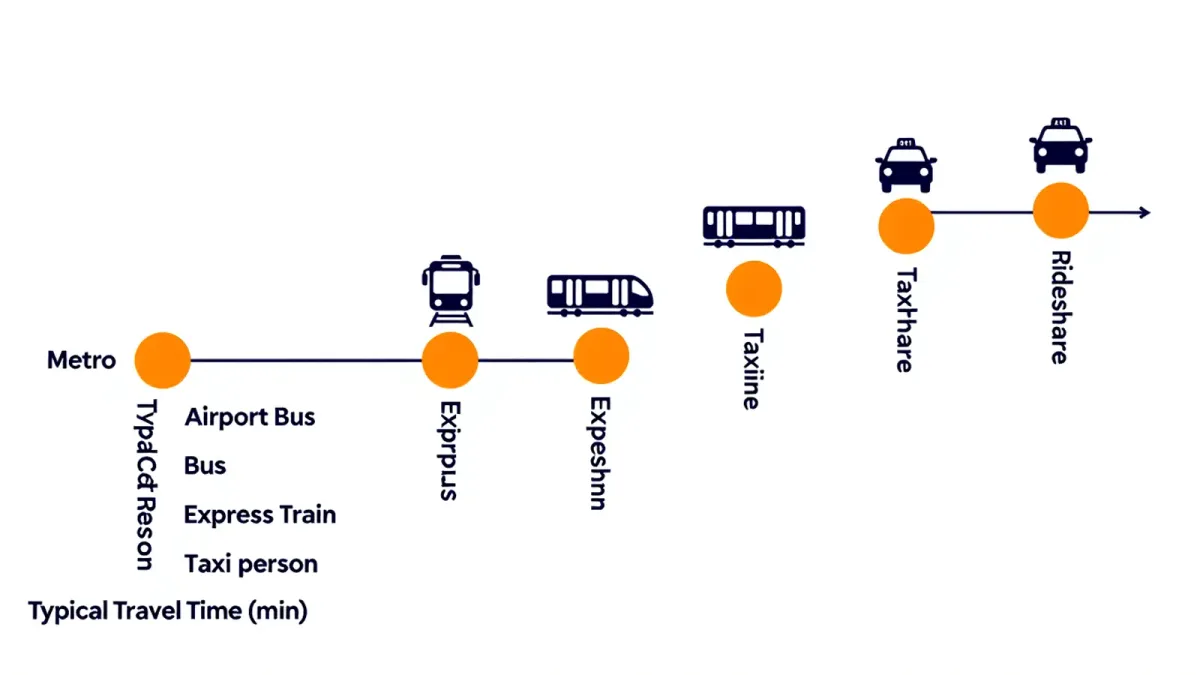
- Tokyo: the Keisei Skyliner runs Narita to central Ueno in about 41 minutes; the Narita Express reaches Tokyo and Shinjuku stations directly. Haneda connects via the monorail and Keikyu line in under 30 minutes from the city. Narita-to-Haneda cross-transfers run 70 to 100 minutes by rail or limousine bus — a three-hour buffer is the honest minimum for a same-day switch.
- Seoul: the AREX express train covers Incheon to Seoul Station in about 43 minutes, with a all-stop commuter alternative at half the price; Gimpo sits on Line 5 and the AREX spur, so ICN-GMP transfers via Seoul Station take about 90 minutes total.
- Kuala Lumpur: both terminals share one site — the KLIA Ekspres and a free-ish interterminal shuttle bridge the 2 kilometers; this is a terminal change, not an airport change, and 90 minutes landside is comfortable.
Which mistakes cost connection days?
- Booking separately-ticketed LCC and full-service legs through different airports with no visa to enter the country — a missed first leg strands the second, and no airline owes a rebooking across separate tickets.
- Ignoring baggage: if the first airline cannot check bags through, you must clear immigration and customs to recheck them — which requires entry permission and turns a 90-minute transfer into a 3-hour errand.
- Trusting city-center hotel arrival times built on the closer airport's rail link when the ticket lands at the farther one — Narita and Suvarnabhumi each add an hour to day-one plans.
- Confusing Kuala Lumpur's terminal 2 with a second airport: cheap, close, and easy — versus Bangkok and Tokyo, where the codes are genuinely different worlds.
What should you check before booking the ticket?
Three reads of the itinerary, done in order. First, codes on every leg — the difference between BKK and DMK or NRT and HND is the whole article. Second, ticket linkage: one record locator, or two separate bookings that happen to touch? Separate tickets mean no protection, no through-checked bags, and no rebooking obligation when the first flight slips. Third, the arrival time against the transfer system's last departure: the Suvarnabhumi-Don Mueang shuttle and the airport rail links all stop overnight, so a 23:00 arrival followed by an 06:00 departure from the other airport means a prebooked taxi and a budget hotel landside, not a heroic same-night connection. Doing this check at booking time costs two minutes; doing it at the airport costs a day of travel.
How much buffer should you plan?
Same airport, same ticket: the airline's minimum connection time governs, typically 60 to 90 minutes in the region's hubs. Same airport, separate tickets: three hours. Different airports, one ticket: three hours minimum plus a check of the shuttle's last departure time. Different airports, separate tickets: do not plan it as a connection at all — book an overnight, see the city, and travel to the second airport on a fresh day. In this region, the fare saved by the tight same-day double-switch is reliably smaller than the rebooking cost of one missed leg.
Transfer times and shuttle arrangements checked against airport operator guidance as of January 2026 — verify shuttle hours and rail timetables on the official airport sites the week you travel.