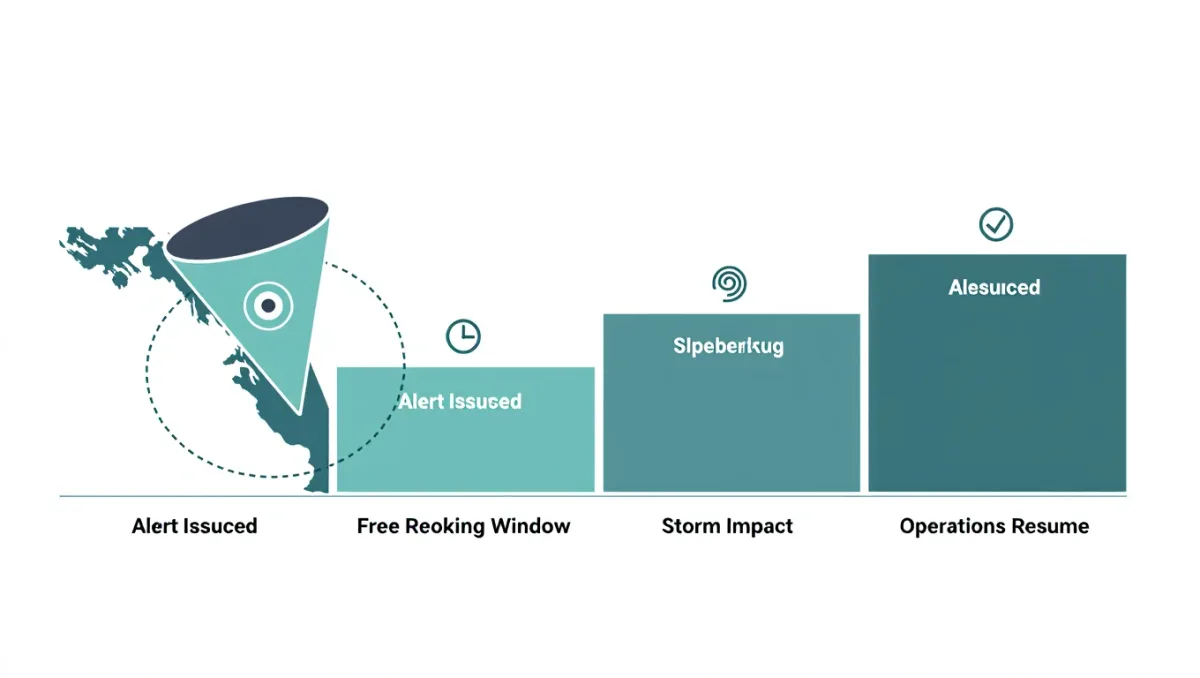
An airline weather waiver is a pre-emptive rebooking policy: when a storm threatens, the carrier names specific airports and travel dates and lets affected passengers change once without change fees — often with waived fare differences or full refund rights if the flight is ultimately canceled. The single rule that decides how much a waiver is worth: rebook before the airline cancels your flight. Once the cancellation posts, the waiver's free-change window typically closes and you are in standard cancellation-refund territory, per DOT's consumer rules.
Waiver terms differ by carrier and by event, and this article publishes information, not travel advice — always read the airline's own travel-alert page, which governs.
How does a weather waiver actually work?
Per the travel alerts airlines publish before named storms, a waiver covers passengers ticketed for specific airports on specific dates — usually a several-day band around the storm's projected landfall. It typically offers one free change to nearby dates, sometimes waiving the fare difference for travel completed within a set period, and often allows a full refund if you no longer want to travel, even before any cancellation. The alternative dates are usually on the same route between the same cities; waivers do not generally entitle you to reroute to a different destination for free.
When should you act on a waiver — early or late?
Early, with one exception. Acting on day one of the waiver gives you the empty seat map: first-choice alternate flights, seats together, and space before other passengers flood in. The exception: if the forecast may swing away from your airport, a free-standing waiver often permits a refundable hold-back — wait for the next forecast cycle, but recheck every advisory, because the best alternate flights vanish first. Never wait past the cancellation: a canceled flight triggers your DOT cash-refund right, but the waiver's free rebooking convenience is gone.
Waiver rebooking versus cancellation refund — which is better?
They answer different problems. If you still want the trip, the waiver is usually better: you keep the fare and dodge change fees, sometimes dodging fare differences too. If the trip is dead, a cash refund — owed when the airline cancels and you decline rebooking, regardless of cause per DOT guidance — beats accepting a credit you may never use. The mistake to avoid is passive acceptance: many apps push a travel-credit default, and taking it trades a refund right for store credit.
Does travel insurance replace a waiver?
No — it stacks on top. Waivers come from the airline and cost nothing extra; trip insurance is a separate contract that can cover the nonrefundable pieces an airline never holds: prepaid tours, a second airline's separate ticket, lodging with strict cancellation terms. Hurricane coverage in policies typically requires that the storm be named before your purchase date or within a defined window, per standard policy wording — which is why insurance bought at first deposit, not at storm watch, is the version that pays.