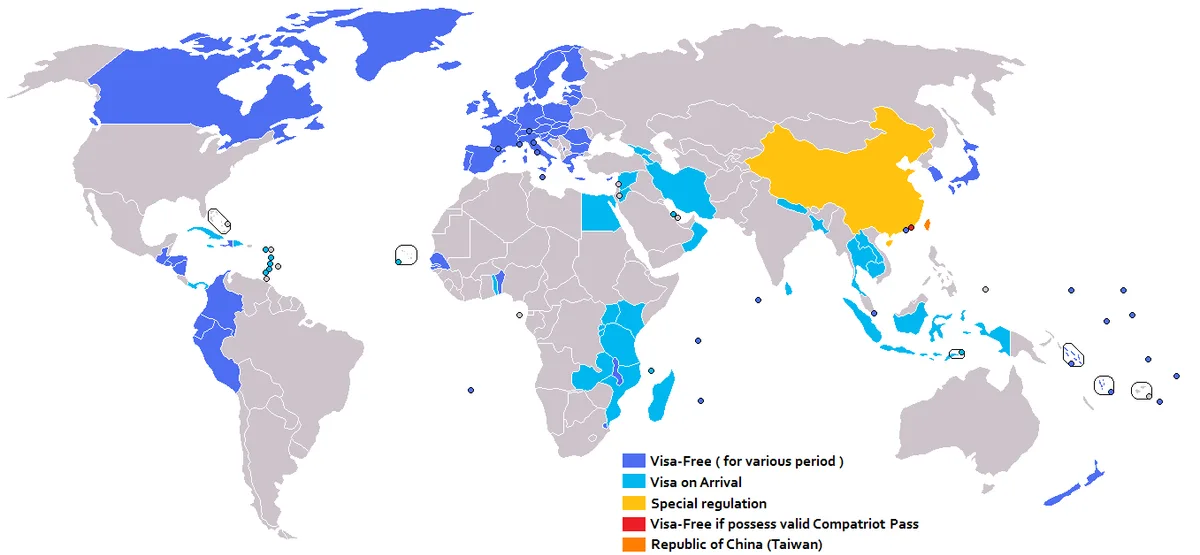
US citizens need a visa for China for ordinary tourism — there is no visa-free entry for US passport holders arriving for a standard visit, per China's visa policy as administered through Chinese embassies and consulates as of early 2026. The standard route is a tourist (L) visa; US applicants are eligible for a 10-year multiple-entry version, and the consular fee for US citizens is $140 regardless of validity, per the published US-citizen fee schedule. The one visa-free path is transit: the 240-hour visa-free transit policy, expanded in December 2024, lets eligible travelers — including US citizens — enter visa-free for up to 10 days while transiting to a third country through designated ports of entry.
Rules change — verify with the official Chinese visa application service and your consulate before booking. This is information, not immigration advice.
How does the 240-hour visa-free transit work?
The traveler must be in transit to a confirmed onward destination in a third country — a US-to-China-to-US itinerary does not qualify — with a booked onward ticket departing within 240 hours, and entry through one of the designated ports that apply the policy, which cover many major airports and, since the December 2024 expansion, a wide set of entry points across multiple provinces. You apply at the border by declaring visa-free transit; immigration issues a temporary entry permit, and you must stay within the permitted areas. The policy suits a layover trip of a few days. It does not suit a two-week vacation, and border officers hold final discretion, so carry printed onward tickets and lodging confirmation.
What tourist visa should most travelers get?
The L visa, and for US citizens the practical answer is the 10-year multiple-entry version, because the fee is the same $140 as shorter validities for US passport holders — a long-standing reciprocity arrangement. Each entry allows a stated duration of stay, commonly up to 60 days per entry on issued visas, though the consular post sets the actual duration. Apply through the Chinese Visa Application Service Center serving your jurisdiction: online form, passport valid at least six months with blank pages, photo, itinerary, and supporting documents. Processing typically runs several business days to a couple of weeks depending on service level, so apply at least a month or two before travel; an appointment and in-person biometrics submission are generally required.
What documents does the application need?
- Passport valid at least six months beyond arrival, with blank visa pages.
- Completed online application form and a recent photo meeting Chinese specifications.
- Round-trip itinerary and hotel reservations, or an invitation letter for private stays.
- Proof of the appointment and the service fee at the application center.
First-time applicants should expect the process to take weeks, not days, when appointment backlogs are counted — the schedule-openers for popular China itineraries book out months ahead, and the visa clock runs on the consulate's calendar, not yours.
Do other entry rules apply on arrival?
Yes, and they are separate from the visa. All foreign nationals are fingerprinted at most ports of entry. Registration is automatic when you stay in a hotel; guests in private homes must register with local police within 24 hours of arrival. Payments are a real planning item — Chinese urban commerce runs on mobile wallets that foreign cards can now link to, but cash acceptance varies. Carry your passport, since hotels and train stations check it, and keep a digital copy. Health-entry measures have varied by period; check current requirements with the embassy before departure.
What are the common mistakes with China visas?
Four account for most ruined trips. Applying too late — appointment shortages, not processing speed, are the usual bottleneck in busy seasons. Misreading entries: a single-entry visa consumed by a side trip to Hong Kong or Macau leaves the traveler without a valid re-entry, and a new visa takes weeks. Booking an itinerary that does not actually match the transit rule — the 240-hour policy requires genuine onward travel to a third country, and airlines gate-check this before departure. And assuming the visa guarantees admission: it authorizes travel to a port of entry, where border officers set the final permitted stay and can refuse entry. Plan the paperwork as part of the trip timeline — visa first, then the nonrefundable bookings.
What about Hong Kong and Macau?
They are separate jurisdictions with separate rules: US citizens may enter Hong Kong visa-free for stays up to 90 days and Macau for up to 30 days, per those governments' published entry policies. Mainland visas do not cover them, and crossing between mainland China and Hong Kong or Macau is an exit and re-entry — count your L-visa entries accordingly, because a day trip to Hong Kong consumes an entry.
Figures and validity terms above checked as of January 2026 against Chinese consular fee schedules and published transit policies; verify current rules at the official visa application portal before booking, since visa policy has shifted repeatedly in recent years.