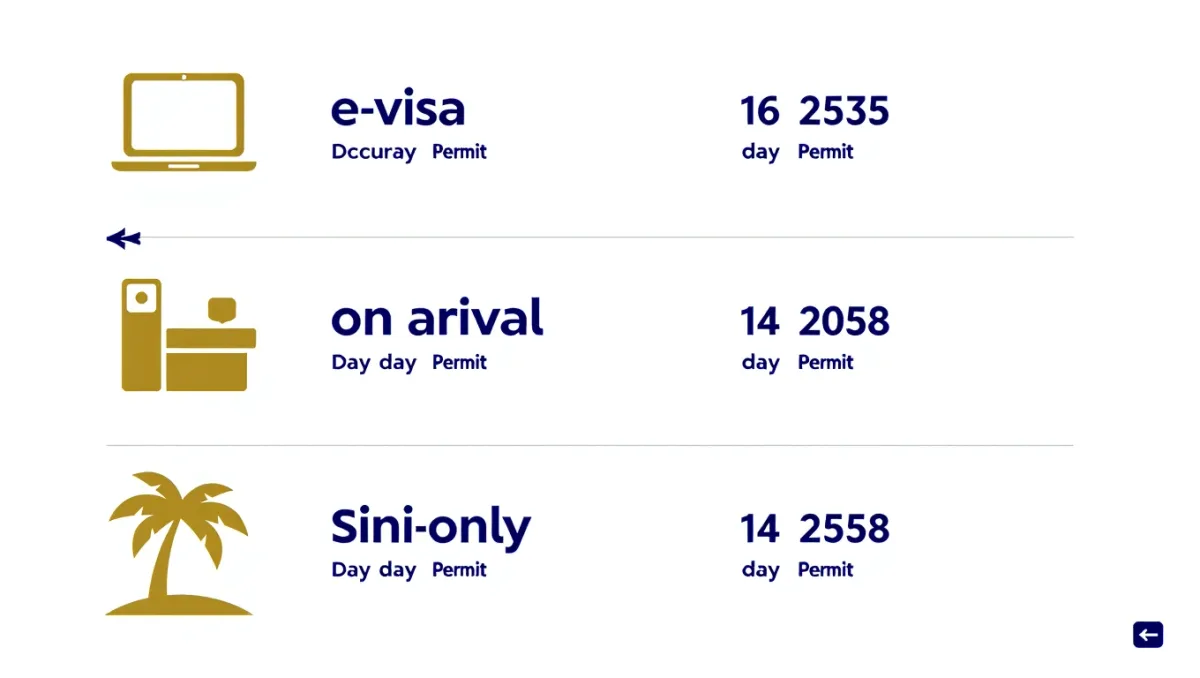
US citizens need a visa to enter Egypt, and there are three ways to get one: the e-visa through the government's official portal, a visa on arrival at Cairo and the main airport points of entry, or the free Sinai-only entry permit for travelers staying within Red Sea resort areas — each per Egypt's published entry rules as of mid-2026. The standard 30-day single-entry tourist visa costs $25 either online or at the counter; a multiple-entry version costs $60. For most itineraries the e-visa is the better route: it costs the same, removes the arrival-counter queue, and is confirmed by email before you fly.
Rules change — verify at the official portal before booking. This is information, not immigration advice.
How does the Egypt e-visa work?
The application is short and entirely online at the official domain: passport data, a scanned passport bio page valid at least six months beyond arrival, hotel or contact details, and card payment. Published processing runs up to about a week, though grants often arrive within days, so apply at least a week before departure and earlier in the October-April high season when volumes peak. The approved e-visa arrives as a PDF; print it, since airlines verify it at check-in and immigration matches it to the passport presented. Only use the government site — search results for Egypt visas are dense with paid lookalike services charging two to three times the $25 government fee for forwarding the same form.
Is visa on arrival still available?
Yes, for US citizens at Cairo International and the principal airports: the same $25 fee, paid in cash — US dollars are accepted — at the bank windows before passport control, which issue the visa sticker directly. On arrival is functional but slower, and the counter accepts cash only, so travelers landing late at night with no local currency should carry exact dollars or choose the e-visa. Cruise passengers arriving at Egyptian ports and travelers crossing by land from Israel at Taba face different arrangements — land borders and ports apply the rules with more discretion, and some nationalities cannot use on-arrival at all, so an e-visa or consulate visa is the safer document for any non-air arrival.
What is the Sinai-only permit?
A free entry stamp restricted to the Sinai resort coast — Sharm El Sheikh, Dahab, Nuweiba, Taba — issued at airports for travelers whose visit stays within those areas, valid up to 15 days. It suits a pure Red Sea diving or resort trip. The moment the itinerary includes Cairo, Luxor, Aswan, or any point beyond the designated coastal strip, the full $25 visa is required, and travelers on the Sinai stamp who range beyond it are in violation of entry conditions. The arithmetic is simple: if the trip touches the Nile, buy the visa; if it never leaves the Sinai resorts, the free stamp exists for exactly that.
What else does an Egypt trip need?
- Passport valid at least six months beyond the arrival date, with a blank page.
- Printed e-visa or cash for on-arrival, matched to the passport details exactly.
- Proof of onward travel and accommodation, requested inconsistently but occasionally.
- Entry registration details — hotels register guests automatically; private stays require registration with local authorities.
- For Red Sea trips, current marine-park and diving rules for protected areas such as Ras Mohammed, checked locally.
Fees and validity terms above checked as of August 2026 against the official Egypt e-visa portal's published schedule; verify current rules before applying, since fee levels and on-availability of on-arrival vary by entry point and period.How does the visa interact with a Nile or Red Sea itinerary?
Entry paperwork is only the first dated item on an Egypt trip. The classic Cairo-Luxor-Aswan circuit runs by domestic flight or sleeper train, both of which require the passport details used at booking to match the entry document, and internal flights check the visa alongside boarding passes. Nile cruises between Luxor and Aswan operate within the standard visa with no additional permit, while Lake Nasser cruises continuing to Abu Simbel run the same rule. Red Sea liveaboards from Hurghada or Marsa Alam need the full visa rather than the Sinai stamp when guests fly into those mainland airports — the Sinai permit attaches only to Sinai arrivals, a distinction that catches divers routing Cairo to Hurghada. On the ground, site tickets for the major antiquities are purchased against passport numbers, so keep the passport accessible rather than in the hotel safe for the day runs.
What mistakes trip travelers up with Egypt entry?
Three dominate. Landing with no visa and no cash: on-arrival counters take cash only, and some secondary airports have limited hours, so the e-visa removes the failure mode entirely. Second, mismatched names — the e-visa must reproduce the passport exactly, including middle names, and airline check-in systems reject near-matches. Third, the six-month passport rule: Egyptian practice expects validity well beyond arrival, and travelers with renewals inside six months are routinely denied boarding. Build the entry paperwork the way the old monuments were built — measured twice, placed once — and the arrivals hall becomes the least memorable part of Egypt, which is exactly what you want it to be.
>