You can see the Dolomites without fighting crowds if you pick your valley before your trailhead. The lift-served areas — Seceda, Alpe di Siusi, Cinque Torri — give huge views for a cable-car ticket and a short walk. The wilder valleys, like Val di Funes and the Puez-Odle backcountry, need legs instead of lifts and reward you with far fewer people. The real decision is not which mountain but which kind of day you want.
As of August 2026, the practical picture looks like this: the hiking season runs roughly June through early October, the busiest stretch is July and August, and the single best fix for crowds is timing — arrive early, or come in late June or September. The range spreads across three Italian regions, so distances that look short on a map take real driving time. Plan around that and the tour buses become someone else's problem.
Where exactly are the Dolomites, and why do they look like that?
The Dolomites sit in northeastern Italy, and the range is big enough to span seven provinces and three regions: Trentino-Alto Adige/Südtirol, Veneto, and Friuli Venezia Giulia. According to Britannica, 18 peaks rise above 10,000 feet, with the Marmolada the highest at 10,964 feet — and its southern face is a 2,000-foot precipice. That vertical drama is the whole appeal.
The pale color and jagged shapes come from dolomitic limestone, a carbonate rock named for the 18th-century French geologist Déodat Dolomieu. At sunrise and sunset the rock catches the light and turns pink and orange — locals call it the enrosadira, and the mountains themselves carry the nickname Pale Mountains. UNESCO inscribed the range on its World Heritage List in 2009.
One thing that surprises first-timers: this is not Mediterranean Italy. Much of the area was once part of the Austro-Hungarian Empire, so you will hear German and the old Ladin language alongside Italian, see bilingual street signs, and eat a lot of dumplings with your pasta. The World War I front line ran through these peaks, and cabled climbing routes called vie ferrate trace old military supply paths.
Lift-served or wild valley: which kind of Dolomites trip do you want?
This is the choice that shapes everything else, so make it first. Both options are good. They are just different trips.
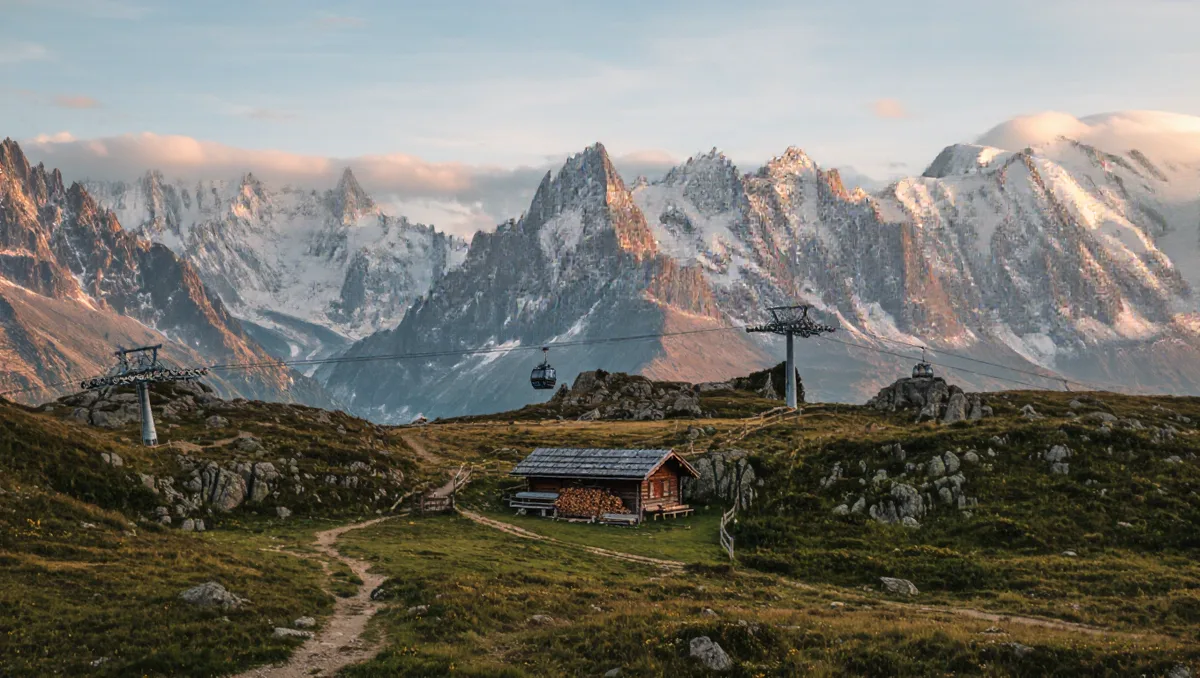
Lift-served valleys buy you altitude with a ticket. The cable car from Ortisei to Seceda drops you on a sweeping ridgeline with the jagged Odle peaks in front of you. Alpe di Siusi, the largest high-altitude alpine meadow in Europe, is car-restricted — you reach it by cable car from Ortisei or Siusi and spend the day walking through wildflowers and past huts. Cinque Torri works the same way from the Falzarego Pass side. The trade-off is that everyone else with a ticket gets the same views, so go early or late in the day. This connects to our earlier piece, Visa Processing Times by Consulate: Why the Same Application Takes Longer in Some Cities.
Wild valleys trade convenience for quiet. Val di Funes, with its walk to the white church at Santa Maddalena framed by the Odle peaks, is one of the most photographed views in the range and still feels calm because you earn it on foot. The Puez-Odle Nature Park trails out of Val Gardena climb away from the road quickly. No lift ticket, no parking scramble — just a longer morning.
Our analysis: if you have three days or fewer, lean lift-served so every hour counts. If you have a week, mix both — a wild-valley day after a lift day is what makes the trip feel like the mountains instead of a checklist.
Why rifugio nights are the best move you can make
A rifugio is a mountain hut, usually perched on a ridge or beside a lake and reachable only on foot or by its own cable car. You sleep simply, eat hearty South Tyrolean food, and wake up in the mountains before the day-trippers arrive. If I could pick one experience here, it would be this — the huts near Tre Cime and up on Lagazuoi are the iconic ones, and dinner at 2,000 meters beats any restaurant with parking.
The culture matters as much as the convenience. Rifugi run on half-board rhythms: you reserve, you show up by the stated dinner hour, you eat what the kitchen is serving that night. The food is the point — canederli, polenta, goulash, strudel — cooked for people who hiked to get there. Book early for peak season; the huts are small and the good ones fill months ahead.
What this means for your planning: a rifugio night converts a crowded day hike into a two-day trip with the best hours — sunset and early morning — entirely to yourself. Build at least one into any itinerary longer than three days.
How do you actually dodge the tour buses?
Crowds in the Dolomites are predictable, which means avoidable. The pattern is simple: everyone arrives mid-morning at the same three or four spots.
- Start before 7:30am at the famous trailheads. The circular trail around Tre Cime di Lavaredo is about 10 km and not technically hard, but its parking area fills fast in summer and the crowds build by mid-morning.
- Know the car bans. Between July and early September, cars are banned from the Lago di Braies access road between 9:30am and 4pm — go early, or take the shuttle from Braies village.
- Pick the season, not just the hour. July and August bring wildflowers, open lifts, and the biggest crowds. Late June or September gets you good weather, fewer people, and the same pale peaks.
- Walk ten minutes past the viewpoint. The bus groups stop where the pavement stops. The trail continues.
One more structural fix: split your base towns. The eastern Dolomites (Cortina d'Ampezzo, Tre Cime, Lago di Braies) and the western ones (Val Gardena, Seceda, Alpe di Siusi) are divided by the Val Badia line, and the twisting mountain-pass roads make cross-range drives slow. Staying in one base means long drives to half your plans. Two bases, three or four nights each, beats one base and a lot of windshield.
Getting there and getting around
A car is the ideal way to move around the Dolomites. There is a public bus system, but it runs on a rigid schedule and can be unreliable in some parts of the range. Cortina d'Ampezzo is about two hours from Venice by car; Bolzano sits at the western edge with good rail connections from Milan, Verona, and Venice. The closest major train stations are Bolzano and Calalzo di Cadore, and from either you still need a car or bus to reach the trails.
The famous passes — Pordoi, Sella, Falzarego, Gardena, Campolongo — are part of the experience, not a chore, though summer traffic, cyclists, and tour buses slow everything down. Budget more driving time than the map suggests. If you are building this into a longer Italy trip, note that Italy is in the Schengen area, so the Schengen 90/180 rule governs how long you can stay — worth a read before you book. Readers following this should also see The Schengen 90/180 Rule Explained: How the Rolling Clock Really Works.
Cortina d'Ampezzo hosts the 2026 Winter Olympics, which means expect extra attention, traffic, and booked-out rooms in and around the eastern Dolomites through that period.
What it costs, and what to pack
The Dolomites are not a budget destination. Lift tickets, rifugio half-board, and hotel rates in the base towns all run high in season, and prices climb further around holiday weeks. The honest way to save is structural: travel in late June or September, sleep in one valley town rather than the marquee resort, and let a rifugio night replace a hotel night rather than add to the total.
Pack for mountain weather even in July. The essentials: broken-in hiking shoes, a rain shell, warm layers for evenings above 2,000 meters, and a paper or offline map — trail signage is good, but phone coverage fades in the back valleys. Bring cash for huts and small lifts; not every rifugio is card-friendly.
Rules change — verify lift schedules, hut availability, and road restrictions with the official operator or tourist office before booking. This guide is general planning information, not advice for any specific trip.
What to take away
The evidence here points one way: the Dolomites reward decisions made before you arrive. Choose your valley type, split your bases east and west, book the rifugio early, and time your days against the bus schedule. What remains uncertain is weather and your legs — both are honest risks, and neither is solved by planning harder. Go in September, eat at the hut, and let the pale mountains do the rest.