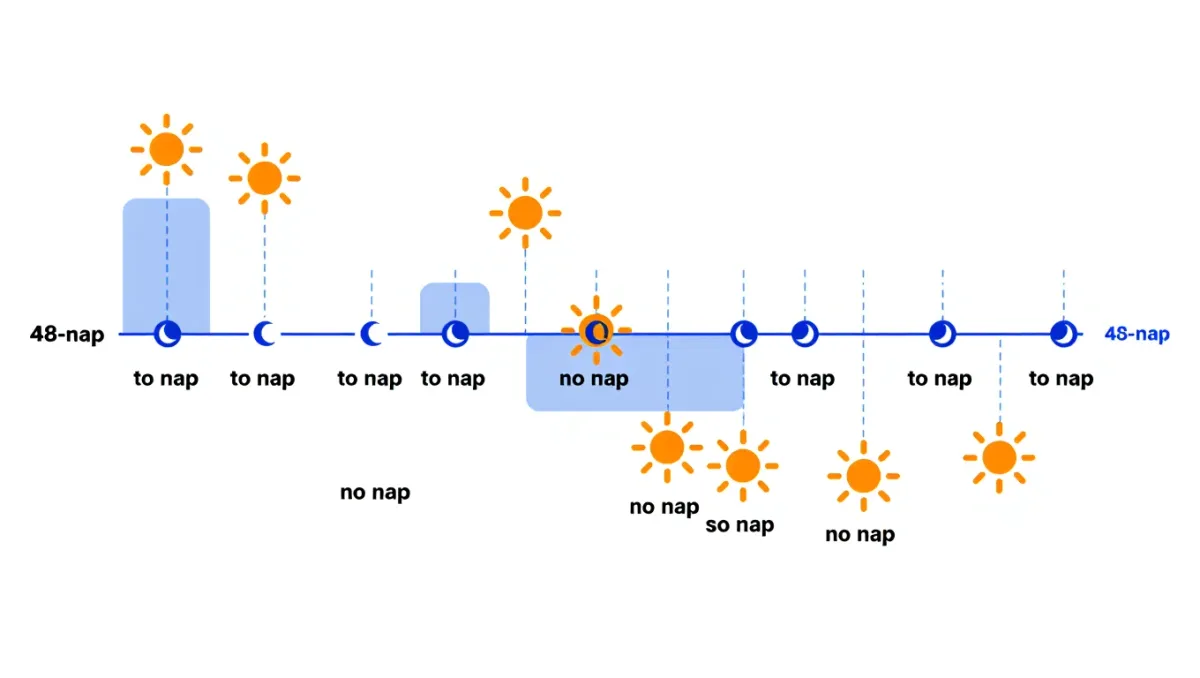
The evidence-backed jet lag kit has three tools: timed light exposure, low-dose melatonin taken at a specific clock hour, and a pre-departure sleep shift of 30 to 60 minutes per day for a few days. Unaided, your body clock adapts about one hour per day eastward — a common rule of thumb drawn from circadian research — which is why a New York-to-Tokyo trip costs most of a workweek if you do nothing. Westward travel is kinder, because staying up later is easier than falling asleep earlier.
Why does light timing matter more than anything else?
Your circadian clock sets itself mainly from light. The practical complication: the same light helps or hurts depending on your phase. For eastward travel you need to advance your clock — bright light in the destination's morning works, while destination-evening light pushes the wrong way. Westward, the rule flips: seek evening light and avoid destination-morning light for the first day or two. Failing that, the classic mistake is kneeling in the hotel lobby sun at 8 a.m. Tokyo after flying east from Europe, which pins your clock to your origin rather than the destination. Sleep masks and closing hotel curtains matter as much as sunglasses; the dark half of the intervention is the easier half to get right.
What does melatonin actually do, and how do you take it?
Melatonin is a clock signal, not a sedative — small doses shift the circadian phase, and the timing carries the effect. The research consensus, summarized in systematic reviews such as the Cochrane review of melatonin for jet lag, finds doses from 0.5 to 5 mg reduce jet lag on eastward trips crossing five or more time zones when taken close to the target bedtime at the destination — often 30 minutes to an hour before local sleep time for several days after arrival. Westward, usefulness is limited and timing is less intuitive, so the honest advice is: skip it or take clinical advice. Two cautions from the same literature: more is not better — large doses prolong grogginess — and product quality varies because supplements are lightly regulated.
Do the popular tricks hold up?
| Method | Verdict |
|---|---|
| Timed light exposure | Strongest supported lever; direction-specific rules apply |
| Melatonin 0.5-5 mg at target bedtime | Supported for eastward, 5+ time zones (Cochrane) |
| Pre-departure sleep shift | Supported logic; 30-60 min/day for 3 days moves the clock measurably |
| Argonne anti-jet-lag diet | No reliable evidence; the much-cited study was self-reported and never replicated |
| IV hydration clinics at airports | Marketing ahead of evidence for jet lag specifically |
| Drinking lots of water on board | Prevents dehydration discomfort, not clock misalignment — real but different benefit |
What is a workable eastward protocol?
- Three days before departure, shift sleep and meals 30-60 minutes earlier per day and get bright outdoor light right after waking.
- In flight, sleep on destination night — an eye mask and earplugs outperform any pill — and avoid alcohol, which fragments sleep at altitude.
- Day one at the destination: no naps past 20 minutes, bright light in the destination morning, melatonin 30-60 minutes before target bedtime if you use it at all.
- Days two and three: hold local meal times and get outside before noon; the clock finishes the job the schedule started.
- Caffeine before noon only — its half-life of roughly five to six hours turns an afternoon coffee into an 8 p.m. stimulant.
What should frequent eastward flyers systematize?
Treat the first destination morning as the intervention, not the recovery day. Book an arrival that lands in destination morning or early afternoon, resist the hotel-bed nap beyond 20 minutes, and spend two hours outdoors before noon even if the schedule is empty — the light does the work while you drink the coffee. Keep a standing kit: eye mask, earplugs, and a caffeine plan written by destination clock, not body clock. Travelers crossing time zones weekly — crew, consultants, athletes — add one more rule: anchor sleep, a protected four-hour core sleep window held at the same destination-time every night of a trip, which keeps the clock from drifting into full disorder between shifts. The difference between surviving and suffering jet lag, for most people, is not a pill; it is whether the first two days have a schedule.
How does the math change westward?
Flying west, you stretch the day instead of compressing it: stay awake to destination bedtime, chase evening light, and refuse the 6 p.m. collapse into bed that buys you a 3 a.m. wake-up. For crossings of six or fewer zones westward, most travelers adapt without melatonin in two or three days. The one hybrid case worth naming: north-south flights along a meridian cross few or no time zones — no jet lag, only ordinary fatigue — and travelers who treat a Johannesburg-to-Paris-scale itinerary like a clock problem usually medicate a non-problem.
Evidence summarized from circadian literature and systematic reviews as of 2025; discuss any supplement use with a clinician before travel.