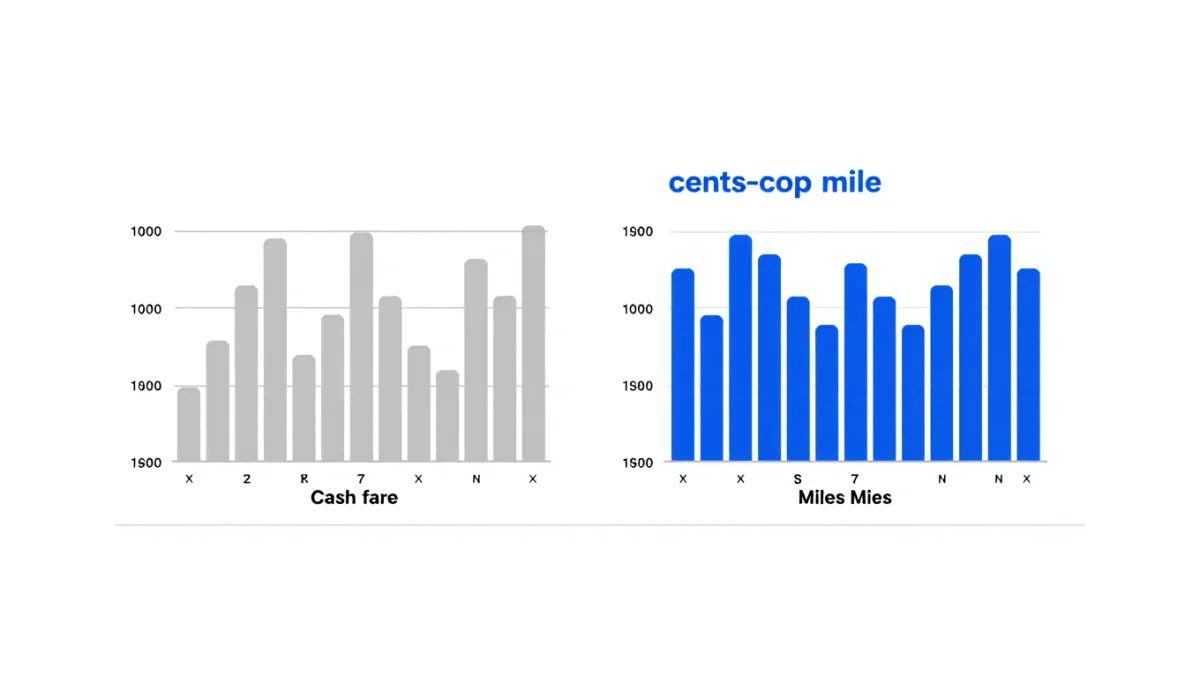
Plan award travel around one number: cents per mile. Published valuations place mainstream airline miles at roughly 1.2 to 1.5 cents each in economy and 2 cents or more in long-haul business class as of 2025, so a redemption below the floor is usually a cash fare in disguise. The planning discipline that follows is simple — set the trip, find award space early, compare against the real cash price, and only then move points.
When should you book award flights?
As early as the airline's schedule allows. Most major carriers open their schedules and award inventory roughly 330 to 360 days out, and premium-cabin award space on desirable long-haul routes is frequently claimed within days of release. Two patterns reward early action: first, partner award space — seats an airline releases to its alliance partners — often appears in limited monthly allotments; second, airlines have shifted most programs to dynamic pricing, where award rates rise with cash fares, so the cheap dates disappear rather than linger. If your dates are fixed and the cabin matters, book at open. If dates are flexible, watch two to three shoulder weeks around your target.
Are miles better than cash?
Only after a comparison, never by habit. Pull the cash fare for the same flight, divide your miles required by that fare, and check the result against the floor: 60,000 miles for a $620 economy fare is about 1.03 cents per mile — below floor, pay cash. The same 60,000 miles for a $1,300 fare is 2.2 cents — worth redeeming. Dynamic programs blur this math because award prices float, which is exactly why the division step matters every time. Airlines also sell miles at inflated prices; at typical sale prices around 2 cents per mile, buying miles only pays inside specific redemption sweet spots, not for routine economy tickets.
How do you build a balances strategy?
- Keep points transferable until needed: bank points that transfer to multiple airline programs hold their flexibility; move them to an airline only when a specific award space is held.
- Watch transfer bonuses: periodic 20 to 40 percent transfer bonuses can cut the miles required for the same ticket; they run for weeks, not months, so a planned trip waits for them well.
- Consolidate programs: splitting points across six programs builds six balances too small for any useful ticket; two or three programs you actually fly beats a scattered portfolio.
- Track expiration: many programs expire balances after 18 to 24 months of inactivity; a small earning activity or redemption resets the clock.
How do you plan awards for more than one person?
Group award travel is a different sport: award space sells seat by seat, and a cabin showing two business-class seats rarely holds four. Two adjustments fix most family plans. First, book at schedule open for the whole party, in a single reservation, so the inventory you found is the inventory you ticket. Second, use pooling features where the program offers them — several airlines let household members combine balances or book from each other's accounts directly, which turns four thin balances into one bookable ticket. If the full cabin is not there, split the search: two seats on one flight and two on the next is a normal outcome, and far better than holding out for perfection while the space you saw disappears.
What are the classic sweet spots?
Predictable, repeatable redemptions anchor most planning: long-haul business class on routes where partner award charts still price below dynamic levels; off-peak calendar awards on a few legacy carriers; and short-haul economy hops on regional partners, where distance-based charts price a two-hour flight at a fraction of the cash fare. These pockets shrink as programs go dynamic — several US carriers have fully dynamic pricing now — which is why the comparison step, not any memorized chart, is the durable skill.
What mistakes cost the most?
Four, in ascending order. Redeeming for merchandise or gift cards, typically valued under half a cent per point. Ignoring taxes and carrier-imposed surcharges, which on some European award redemptions exceed the cash fare on a discount airline. Hoarding without a target, letting devaluations — which have recurred across major programs roughly every few years — erode the balance. And the subtle one: treating miles as free and flying worse itineraries to use them. A mile is a stored discount, not a coupon for bad planning; if the award itinerary costs a day of your life, price that day too.
Valuations above reflect published 2025-2026 program terms and independent mile valuations, checked as of May 2026; verify current award pricing in the booking tool before transferring any points, because transfers are final. Set a calendar reminder at 330 days for any trip with fixed dates; the earliest planners consistently see the best inventory.