A transit visa is required when your nationality has no visa-free entry to the country you connect in — and, on several routes, even when you never leave the gate area. The deciding split is airside versus landside: an airside (airport) transit visa covers staying inside the international transit zone, while a landside transit visa is needed the moment you pass immigration to change terminals, exit and re-enter security, or leave the airport. Since mid-2024, the standard Schengen short-stay visa fee is €90 and the airside transit version (Type A) is €45 — but most connecting passengers through Schengen hubs need neither, because their nationality already allows visa-free entry.
This is information, not legal or immigration advice. Transit rules are among the most nationality-specific in travel — check the connecting country's official border or embassy page for your exact passport before booking.
Which countries require transit paperwork even airside?
A few major jurisdictions treat every international connection as an entry event:
- United States. There is no airside transit zone in practice — everyone connecting through a US airport must be admitted, which means ESTA authorization for Visa Waiver Program nationals or a C-1 transit visa (the standard $185 MRV fee applies) for everyone else. This surprises travelers routing via Los Angeles or New York to save on a fare.
- United Kingdom. Whether you need a Direct Airside Transit Visa (£35 as of the 2025 fee schedule) depends on your nationality; if you pass border control to change airports or terminals landside, a Visitor in Transit visa (£115 in 2025) applies instead. Exemptions exist for holders of US, Canadian, and other specified visas or residence permits.
- Canada and Australia. Visa-exempt travelers generally need an eTA (Canada) or a transit visa (Australia's free subclass 771) rather than nothing; US citizens are exempt from the Canadian eTA.
When is transit visa-free or visa-free on arrival?
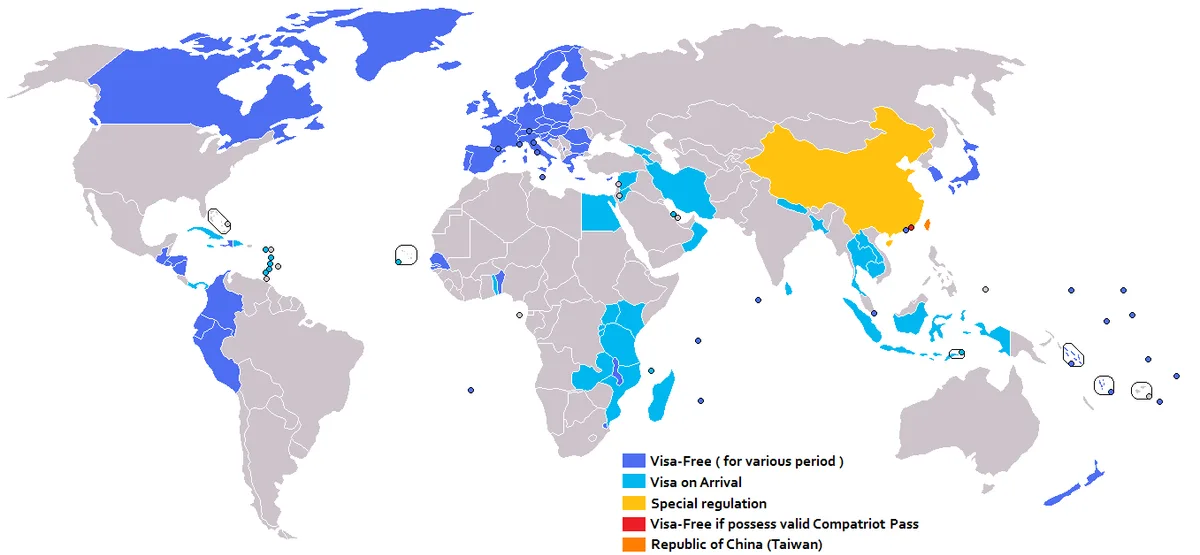
Many countries run explicit two-step international transit (TWOV) schemes. China's is the largest: expanded in December 2024, the visa-free transit policy now allows qualifying nationals of around 55 countries to stay up to 240 hours across an expanded list of 60 ports of entry, provided they arrive from one country and depart for a third with confirmed onward tickets. Gulf hubs operate airside zones where connections need no visa for any nationality, but a landside exit — even an overnight hotel stop on a long layover — usually triggers a visa or a paid entry permit.
How do you check your specific connection?
- Identify every connection point on the itinerary, including the outbound and return journeys — rules differ by direction on some routes.
- Ask two questions per point: does my nationality need any transit document, and does my connection pass immigration (same-terminal vs cross-terminal, separate tickets, overnight)?
- Check the connecting country's official immigration website for your nationality, not a booking site's summary.
- If separate tickets force you to collect and recheck bags, assume landside entry rules apply.
What happens if you get it wrong?
The airline enforces transit rules at check-in, not the border: carriers face fines and return-transport costs for carrying improperly documented passengers, so gate agents routinely deny boarding. That means a transit-visa miss does not produce an argument at the border — it produces a missed trip, and on nonrefundable fares, a total loss. Travel insurance rarely covers an undocumented-passenger denial, because document requirements are the traveler's responsibility.
| Jurisdiction | Airside connection | Landside / leaving airport |
|---|---|---|
| Schengen | Type A airport transit visa only for listed nationalities (€45); most need nothing | Type C short-stay visa (€90) unless visa-free |
| United States | No true airside zone — ESTA or C-1 visa required for everyone | Same requirement; admission, not transit |
| United Kingdom | DATV £35 for listed nationalities; many exemptions | Visitor in Transit £115 (2025 fees) |
| China | Direct transfers generally no visa | 240-hour visa-free transit for ~55 nationalities via 60 ports (since December 2024) |
| Gulf hubs (DXB, DOH) | No visa for any nationality | Entry permit or visa-on-arrival by nationality |
Read the table as a starting point, not an answer: every cell hides nationality lists that are revised without much announcement, and low-cost carriers at secondary airports can change which terminals — and which rules — your connection touches. The pattern worth remembering is the shape of it: the US sits at one extreme with no airside transit at all, the Gulf hubs at the other with open airside zones for everyone, and the UK, Schengen, and China in between with nationality-specific lists.
Does the transit rule change if bags are checked through?
No. Baggage handling and transit visas are independent. Checked-through bags do not create an airside exemption, and a landside transit visa can be required even when your bags fly on to the destination without you — the visa question follows the passenger, not the luggage. Conversely, same-ticket itineraries with through-checked bags can still require you to clear immigration when terminals are in different zones.
Rules checked against official government fee schedules and border pages as of 2025; transit lists are revised often, so verify each connection on the official portal for your passport before booking.