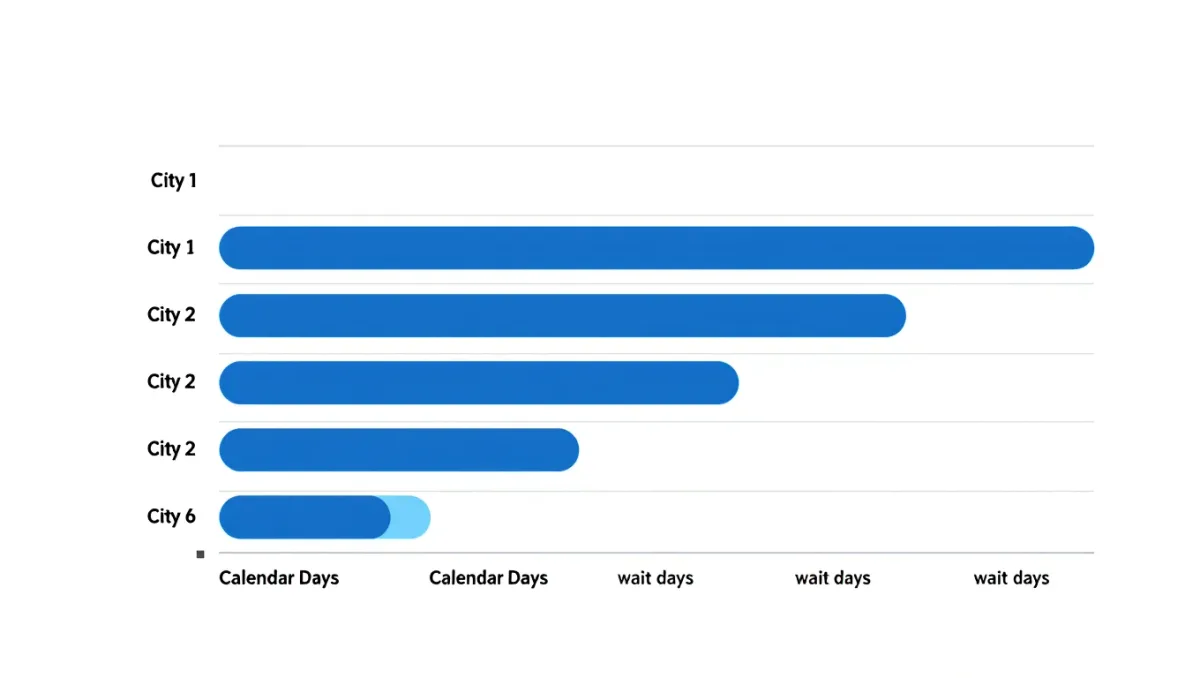
The US State Department publishes visa appointment wait times for every embassy and consulate on its Global Visa Wait Times page, updated monthly, and the page shows two distinct numbers: the wait for an interview appointment and the typical time added by administrative processing after the interview. For a B2 tourist visa the appointment wait is the whole story at most posts — in 2025 it ranged from a few days at smaller consulates to several months at high-volume ones. For an H-1B, the consular wait is only the final stage; the USCIS petition and, since the fiscal 2026 season, a $215 registration fee per candidate come first.
This is information, not legal or immigration advice. Wait times move monthly and fees change — check the State Department's page for your specific post the week you plan to book.
What does the wait-time number actually measure?
The published figure is the median calendar wait for a routine applicant to get an interview slot, not a service guarantee. Three things sit outside it: administrative processing under INA 221(g), which the tool shows as a separate typical duration but which has no statutory ceiling; document-ready drop-box (interview waiver) processing, which for eligible renewals often skips the interview line entirely; and the passport-return logistics after approval, usually days. Reading the two numbers as one — appointment plus processing — is the correct way to back-calculate a booking date for a wedding, a conference, or a start-of-employment date.
How does the H-1B timeline differ from a B2?
| Stage | H-1B | B2 (tourist) |
|---|---|---|
| Pre-consular step | Employer files USCIS petition; $215 electronic registration per candidate (fiscal 2026 season), then petition fees if selected | None — applicant files DS-160 directly |
| Application fee | $185 MRV fee at the consulate | $185 MRV fee |
| Main wait | Registration (March), petition adjudication, then appointment wait | Appointment wait alone at most posts |
| After interview | Same 221(g) risk as B2, plus approved-petition verification | Approval same day in routine cases |
| Validity | Up to petition end, per reciprocity schedule | Up to 10 years multiple entry, per reciprocity; stays capped by admission stamp |
The planning consequence: an H-1B candidate's start date depends on three clocks in series, any one of which can dominate. Registration closes late March each fiscal season; adjudication times post on the USCIS processing-times tool; only then does the consular appointment wait on the State Department page apply.
How do you shorten a wait legitimately?
- Book at any post where you have lawful presence — most posts serve third-country nationals resident there, and wait times differ sharply between neighboring posts.
- Check interview-waiver eligibility before paying: recent renewals of the same visa class, often within 12 months of expiry per current policy, may use drop-box and skip the appointment queue.
- Watch the page for cancellations — slots freed by cancellations appear in real time, and persistence beats agents who sell appointments (a market that also produces fake bookings that get you disqualified).
- For H-1B, ask the employer to file premium processing (a separate USCIS fee) for the petition stage — it accelerates adjudication, not the consular line.
What should you do if you are refused under 221(g) or 214(b)?
Know which refusal you received, because they work differently. A 221(g) is a pause, not a denial: the officer needs more documents or time, the tool's administrative-processing figure describes it, and you follow the post's instructions — usually submitting papers by courier or email without a new fee. A 214(b) refusal, common in B2 cases, is a decision that you did not overcome the presumption of immigrant intent; you may reapply at any time with materially stronger evidence and a new $185 fee, but there is no appeal. H-1B applicants refused 221(g) should tell the employer's counsel immediately, because a start date tied to petition validity may need adjusting.
How do you plan a trip date around the numbers?
Use the tool's two figures as a planning formula: fixed-date events get the appointment wait plus the full typical administrative-processing time plus a two-week buffer for passport return. If that sum passes the event date, either move the booking to a faster post where you have lawful presence or move the event — a refused-reschedule is far cheaper than a missed wedding or a start date without a visa. Recheck the page monthly, because posts add slots in batches and a post quoting three months one month can quote five the next after demand shifts. Finally, keep the DS-160 confirmation and fee receipt alive: a fee paid is valid for a year of scheduling, and appointments can be rescheduled within that window without paying again, which is the cheapest flexibility you can buy.
Why do wait times differ so much between posts?
Three forces: demand volume (posts serving large populations with long reciprocity-validity visas cycle applicants faster), staffing levels, and local policy choices such as interview-waiver breadth. After the pandemic-era backlog, posts recovered unevenly through 2024 and 2025, which is why two consulates a few hundred kilometers apart can quote waits that differ by months. The tool is the only current source — third-party wait-time sites republish stale numbers.
Figures checked against State Department and USCIS pages as of 2025-2026; the wait-time tool updates monthly and the $215 registration fee applies to the fiscal 2026 H-1B season onward unless revised.