The best time to visit Southeast Asia depends on which coasts are on your list, because the region splits into two monsoon halves: November through March brings dry, settled weather to Thailand's Andaman coast, Vietnam's south, and Cambodia, while April through October flips the pattern to Indonesia, Malaysia's east coast, and Thailand's Gulf side, per national meteorological services' climate normals as of 2025. A two-week trip in November or February covers more of the region reliably than any other dates; a June trip can be excellent with the right map and a bad one with the wrong one.
Why does one region have two seasons at once?
The monsoon is a wind system, not a rain machine: from roughly May to October the moist southwest monsoon soaks windward coasts while leeward ones stay dry, and from November to March the northeast monsoon reverses the favor. Thailand demonstrates the split perfectly — Phuket on the Andaman coast is wettest May to October while Samui on the Gulf is at its calmest around the same months, then both trade patterns in the winter. Vietnam stacks the whole system north to south: the south's dry season runs December to April, the center around Da Nang gets its heaviest rain October to December, and the north cools through a misty winter. No month is ideal nationwide; itineraries are built around the coasts' calendars.
What are the best months for each core destination?
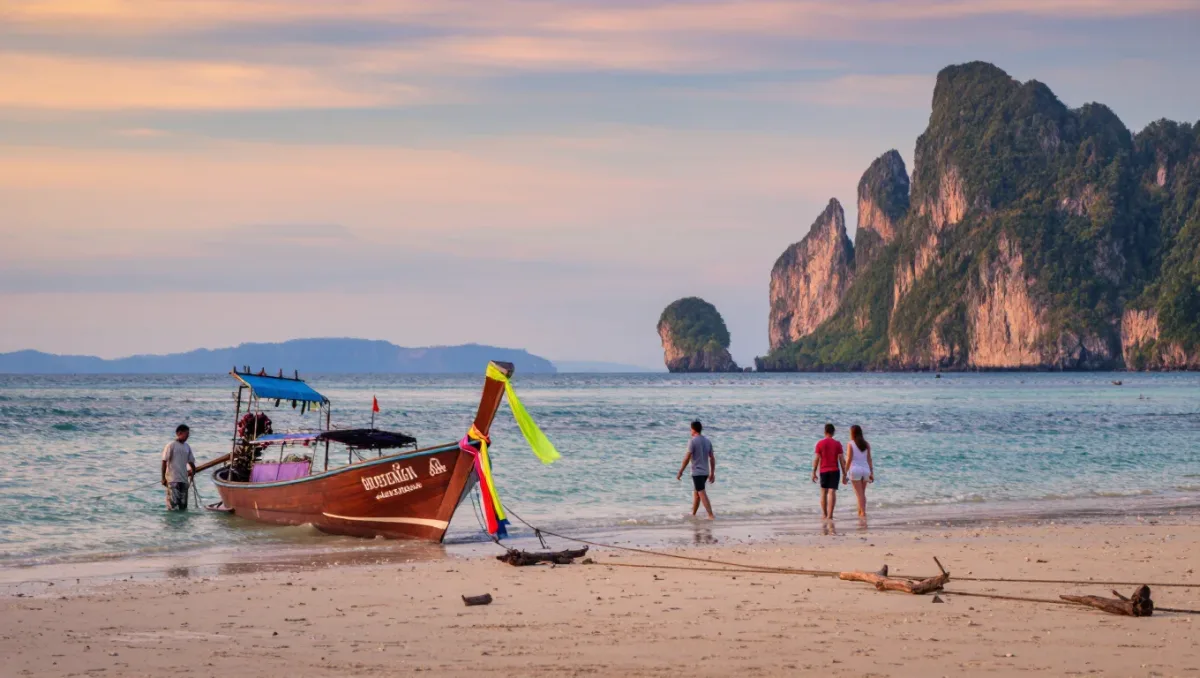
- Thailand's west coast (Phuket, Krabi): November to April; the Andaman Sea is calm and visibility is best for diving.
- Thailand's Gulf coast (Samui, Koh Phangan): January to September, avoiding the Gulf's wet October-December peak.
- Vietnam: south December to April; north September to November and March to April; the center's safe window is roughly January to August.
- Cambodia and Laos: November to February — cool, dry, and the Mekong runs high enough for river travel.
- Indonesia (Bali, Komodo): April to October, the east-monsoon dry; Bali's green months of December-February are cheap and lush with afternoon showers.
- Philippines: December to April for most of the archipelago, outside the Pacific typhoon track's most active months.
When should you avoid the region entirely?
Nowhere needs avoiding outright, but three windows carry real risk. September to early November is the western Pacific's typhoon core: the Philippines and central Vietnam sit in the storm track, and a late-season typhoon rewrites itineraries wholesale, per meteorological service climatology. April and May bring the region's worst heat — pre-monsoon highs above 35 degrees Celsius are routine in the Thai and Cambodian lowlands, and cities feel hotter still. And October is the transition month most likely to disappoint both halves at once, as one monsoon weakens and the other has not organized. None of this forbids travel; it prices it, in risk and comfort, which refundable bookings and travel insurance absorb cheaply.
How do crowds and prices line up with weather?
Pleasant weather sets the crowds: December-January is the region's absolute peak, with Western holiday demand layered onto ideal conditions, and hotel rates in Bangkok, Chiang Mai, and the islands roughly double from their September lows. The value windows sit at the monsoon edges — early November, late March, and June — where the weather statistics are mostly good and the prices are not yet or no longer peak. Booking behavior matters more here than in Europe: beach resorts on small islands sell out over Christmas a year ahead in the best-regarded properties, while city hotels stay flexible year-round. For the green months, the deal is real and the rain is real — plan mornings out, afternoons forgiving.
How does festival season change the calendar?
Two dates distort the whole region. Lunar New Year — late January or February depending on the year — empties Chinese outbound travel into the region for two weeks: flights and hotels in Thailand and Vietnam spike, and in Vietnam itself, Tet shuts much domestic commerce for days, a genuine reason to route around the exact dates. Songkran, the Thai new year in mid-April, is the reverse: a wonderful event to join and a genuine booking constraint in Chiang Mai and Bangkok, with domestic transport sold out days ahead. Plan either festival deliberately, six months out, or avoid them equally deliberately — the failure mode is encountering them accidentally, with full hotels and no plans, which is far more memorable than it sounds.
A planning sequence that works
- List the coasts and cities you actually want; drop the ones in their wet month for your dates.
- Check typhoon exposure for any October-November itinerary involving the Philippines or central Vietnam.
- Book peak-season island lodging as early as flights; book city hotels later and flexibly.
- Verify visa and entry paperwork for each country on the route — each has its own e-visa or exemption scheme with its own clock.
Season windows above reflect climate normals from national meteorological services, checked as of early 2026; individual years vary, so verify current outlooks for your months before final payment.