Pick one base and let the valleys come to you: the centro histórico rewards slow mornings, and ruins plus craft villages fill the rest of the week. Entry to Monte Albán stands at 210 pesos as of October 2026, per INAH, the national archaeology institute, whose flagship zone opens 8:00 to 17:00 daily. The caveat: hours and fees shift, so re-check the official pages before each trip.
Searches for oaxaca travel lean on mole and mezcal, and the food earns it; the bigger surprise is how much sits within an hour of the zócalo. The same one-base-plus-day-trips logic shapes the Iceland Ring Road guide on this site.
The destinations hub holds the rest of the region files, from market cities to highway loops.
Why Stay in the Centro Histórico?
Because the city itself is the headliner. UNESCO inscribed the centro together with Monte Albán back in 1987, and its listing calls the grid-pattern city a model of Spanish colonial town planning, with buildings solid enough to shrug off the region's earthquakes. The UNESCO dossier also records the protected area at 4,375 hectares.
The practical payoff is time. Hotels and markets cluster within a walk of the main squares, so a car stays parked all week and every evening ends on foot. Mornings matter here: the valley heats up by late morning, and the best day trips leave early, so a central bed turns early starts into a non-event. For related coverage, see Kenya's ETA for US Travelers: The Visa-Free Entry That Still Needs Approval.
Which Ruins and Craft Villages Fill a Week?
Two INAH sites anchor the day-trip math, and two craft villages round out the circuit. All four sit on standard valley routes from the city, which keeps the logistics light, and shared vans cover the main corridors when a rental car holds no appeal. Hours and fees below come from INAH's zone pages as of October 2026.
- Monte Albán: the mountaintop Zapotec capital, open daily 8:00 to 17:00 with last entry at 16:00 and admission at 210 pesos, per INAH's official zone page.
- Mitla: the valley's later Zapotec seat, famous for limestone mosaics laid into geometric grecas; INAH's Mitla page lists the same 210-peso entry, 8:00 to 17:00, with last admission at 16:30.
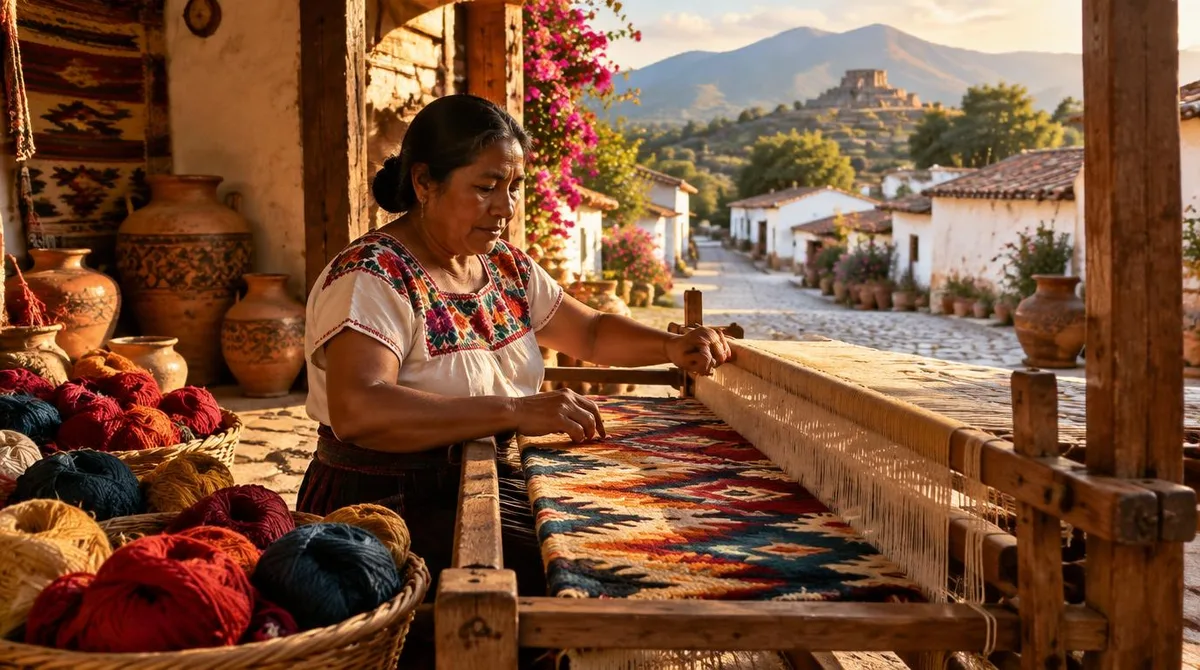
- Teotitlán del Valle: the weaving village between the city and Mitla, where family workshops still dye and loom wool rugs by hand.
- San Bartolo Coyotepec: the pottery town known for barro negro, the burnished black clay this region made its signature.
How Do You Shop the Markets Like a Regular?
Go early and carry small bills, then eat where the benches fill. The covered markets around the centro stack mole pastes beside mounds of dried chiles, and the food stalls serve midday plates to a mostly local line. Bargaining stays gentle here: a polite ask moves prices more than theater does.
Weight matters if the trip continues. Pack a fold-flat bag or skip souvenirs on market day and buy ceramics on the last stop instead, after the breaking risk is done.
Where Does Mole Fit Into All This?
At the table, and it deserves the planning. The region's family of mole recipes runs from dark and chocolate-deep to green and herbal, and the pastes sold by the kilo travel home far better than any bottle. Cooking classes and market walks fill up in busy seasons, so lock one in during the first days of a week-long stay.
Conclusion: Build Days Around One Anchor
One base plus two ruins and two craft villages makes a week that never needs a rental car. Run Monte Albán in the cool morning and save an afternoon for a workshop town. Evenings stay free for the centro, and for a second plate of mole. An eighth day buys a slower market loop, which suits the region better than any checklist. This connects to our earlier piece, The Small Town Chef Story: Why Some Cooks Stay Put and Build a Destination Instead.