Choose an e-visa over a visa on arrival whenever both exist for your passport: an e-visa is approved online before departure with a decision in hand, while a visa on arrival is granted at the border counter at the officer's discretion, with no recourse if it is refused. Fees are often similar — Vietnam's official e-visa costs $25 single-entry or $50 multiple-entry for a 90-day stay, while Thailand's visa on arrival is 2,000 baht — but the risk profile is not. The e-visa's advantage is not speed; it is certainty that follows you to the check-in desk.
This is information, not legal or immigration advice. Entry rules change — always apply through the official government portal and re-verify terms for your nationality before booking.
How does an e-visa actually work?
Mechanically, an e-visa is a pre-cleared entry authorization: you submit a form, photo, and passport scan on the government portal, pay by card, and receive an approval letter or electronic visa by email, typically in three days to two weeks depending on the country. Vietnam's system, expanded to 90-day stays for all nationalities in August 2023, is the model case — one portal, flat fee, printed copy carried to the border. India, Turkey, Sri Lanka, and Australia (via its ETA-style system) run variations on the same idea, differing mostly in processing speed and whether the approval letter or a linked electronic record is what the border checks. What you buy is a decision made by a visa officer in advance, plus a document airlines can verify at check-in.
How does visa on arrival differ in practice?
Visa on arrival moves the entire process to the border: you fill a paper form, hand over photos and cash or card, and wait. Two structural weaknesses follow. First, discretion: the officer decides on the spot, and refusals for missing printed documents, insufficient funds, or onward-ticket questions happen without appeal. Second, capacity: at peak arrival banks, VOA queues routinely stretch past an hour, and when a system hiccups, the line does not move. Airlines treat VOA eligibility more cautiously too — some check-in systems flag routes where VOA lists change often, and a stale list can mean a denied boarding even when the border would have admitted you.
Which mistakes cost travelers the most?
- Third-party lookalike sites. Dozens of paid middlemen rank above the real portals and charge two to five times the official fee for the same document. The official domain ends in the government's own suffix; if the fee is not published on it, leave.
- Digital-only proof. Some borders and most airlines want the printed approval letter. A dead phone battery at immigration is a self-inflicted refusal risk.
- Wrong e-visa type or port. Several e-visas are valid only at listed airports or for single entry — arriving by land at an unlisted crossing voids the authorization.
- Date math. An e-visa's validity window is when you may enter, not how long you may stay; conflating the two produces overstay fines that outlast the trip.
How far in advance should you apply?
Work backward from two clocks: the portal's stated processing time and your airline's check-in requirement. Most e-visa portals quote three business days to two weeks, but published times are medians, not promises — holiday surges can double them, and some systems suspend processing entirely around national holidays in the issuing country. Apply at least three weeks before departure for a standard e-visa, six weeks if the trip sits inside the destination's peak season or your passport expires within six months, which some systems treat as a soft refusal trigger regardless of visa status. Visa on arrival needs no lead time, which is its genuine advantage — but pair it with a refundable or changeable fare, because the approval you are skipping is exactly the approval that lets you fix a problem before the airport. One more asymmetry: an e-visa refusal usually comes with a reason code and a reapplication path; a VOA refusal at the counter comes with the next flight home.
When is visa on arrival the better choice?
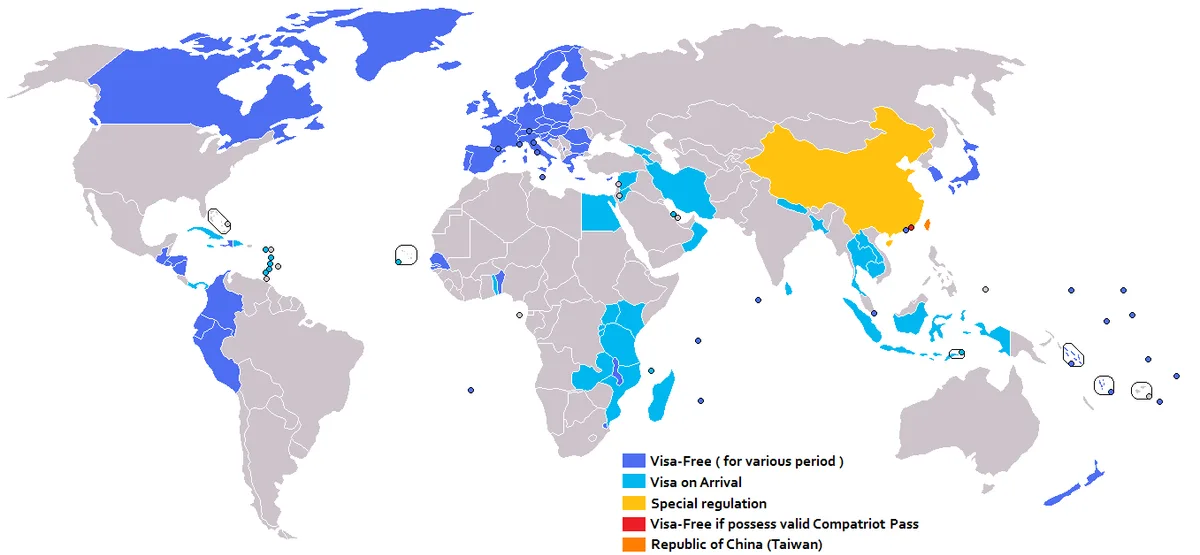
Three cases. Last-minute travel: when there is no time for an e-visa's processing window, VOA keeps the trip possible. Fee symmetry with flexibility: if plans are fluid, paying at the border avoids an e-visa tied to fixed dates. And coverage gaps: some nationalities have VOA access but no e-visa option at all. But the trend runs the other way — countries keep converting VOA programs into e-visa or electronic-travel-authority systems. Kenya abolished visas entirely on January 1, 2024, replacing them with an electronic travel authorization that every visitor must obtain before boarding, per the government's announcement. Assume any VOA program you used last year may be an online form now.
Fees and terms cited here were checked against official government portals as of early 2026; entry rules are revised without notice, so confirm on the official domain for your passport before you fly.